
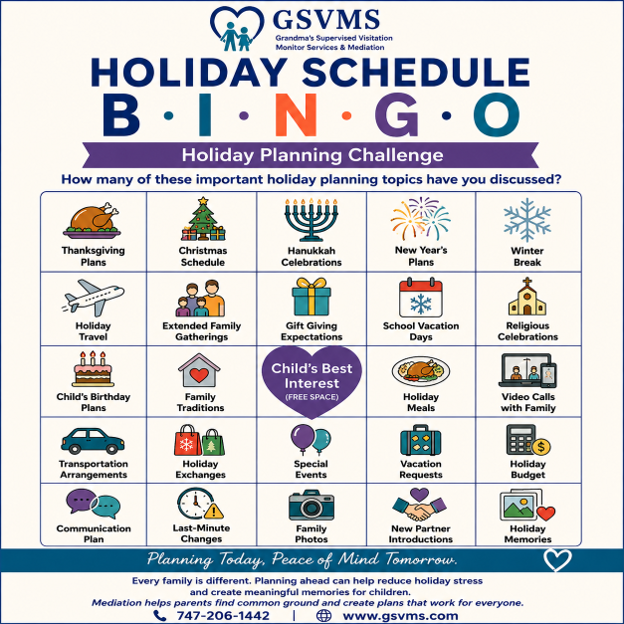
Holiday Schedule Planning: Conversations Every Co-Parent Should Have Before the Holidays - The GSVMS Co-Parenting Bingo Series #5
Plan Before the Calendar Gets Crowded
Holidays can be joyful for children and stressful for parents when expectations have not been discussed in advance. School breaks, travel, family gatherings, traditions, gifts and transportation can all create avoidable conflict when details are left until the last minute.
Holiday Schedule Planning Co-Parenting works best when parents discuss expectations early, put important details in writing, and keep the child’s experience at the center of holiday decisions.
This post is part of the GSVMS Co-Parenting BINGO series: practical conversation starters designed to help families identify issues before they become unnecessary sources of conflict.
Start with known dates such as school closures, work commitments, existing parenting orders and travel plans. Then identify what still requires agreement: pickup times, return times, exchange locations, overnights, special events and how changes will be communicated.
Keep the Child Out of the Scheduling Dispute
Children should not be asked to negotiate holiday time, choose which celebration matters more or carry messages between households. Adults can disagree while still protecting the child from feeling responsible for the outcome.
Traditions, Gifts and Extended Family
Different homes can have different traditions. The goal is not to make celebrations identical, but to give children permission to enjoy meaningful time with both sides of their family without competition or guilt.
Travel and Exchange Details
Holiday travel may require discussion about traffic, flights, passports, luggage, medications, emergency contacts and delays. Realistic exchange times and written confirmation can prevent confusion.
When Parents Celebrate Different Holidays
Co-parenting calendars can include Thanksgiving, Christmas, Hanukkah, New Year celebrations, birthdays, cultural observances and school-break traditions. Parents do not need identical customs, but they do need clarity about which dates are important and how overlapping celebrations will be handled. A written plan can reduce assumptions and help both households prepare.
It can also help to distinguish the legal parenting schedule from optional family events. A relative’s dinner, party or special tradition may be meaningful, but it may not automatically override the existing schedule. Discussing these events early gives parents room to consider reasonable flexibility without putting pressure on the child.
Avoid Last-Minute Bargaining
Holiday conflict often increases when one parent raises a request after travel has been booked or extended family has already made plans. Whenever possible, set a deadline for vacation requests and special-event changes. That gives both households a fair opportunity to plan.
If a late request does arise, focus on the practical question in front of you rather than using the moment to reopen old disputes. A one-time accommodation can remain a one-time accommodation if both parents clearly understand that it does not change the regular schedule.
Create a Child-Friendly Holiday Rhythm
Children can become exhausted when holiday time is packed with repeated exchanges, long drives and multiple celebrations in a short period. More events do not always mean a better holiday. Sometimes a calmer schedule gives children more opportunity to enjoy each household.
When reviewing the calendar, consider the child’s age, sleep needs, travel tolerance and school responsibilities. The most balanced plan may not divide every hour equally, but it should provide meaningful time and predictable transitions.
Confirm the Final Plan
Once decisions are made, write down the final dates, times, locations and transportation responsibilities. A clear written summary helps prevent two people from remembering the same conversation differently.
Before the holiday begins, review any special details such as medication, luggage, schoolwork, passports or emergency information. A few minutes of preparation can prevent a stressful exchange later.
Holiday Schedule Planning BINGO
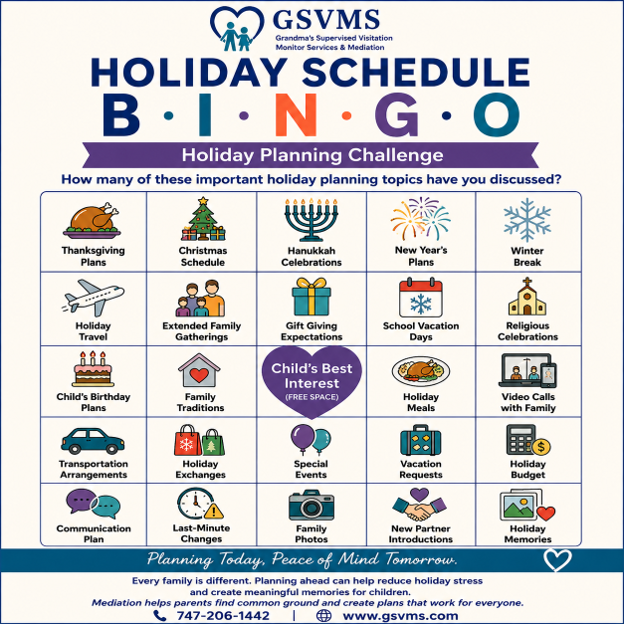
How to Play
Check each square that your family has already discussed or addressed. Five in a row—across, down, or diagonally—is BINGO. The unchecked squares are not failures; they are conversation starters that may reveal topics worth discussing before a problem develops.
How Many Boxes Can You Check?
Compare your completed squares and notice which subjects still need attention. The goal is not to “win” every square. The real value is identifying decisions early, communicating clearly and keeping children at the center of the planning process.
Call To Action
If these conversations are becoming difficult, GSVMS mediation services can help parents work through practical parenting and co-parenting issues in a structured setting.
GSVMS — Grandmas Supervised Visitation Monitors & Mediation Services provides mediation by Zoom and supervised visitation services throughout Southern California.
747-206-1442 • www.gsvms.com
Planning Today, Peace of Mind Tomorrow.