
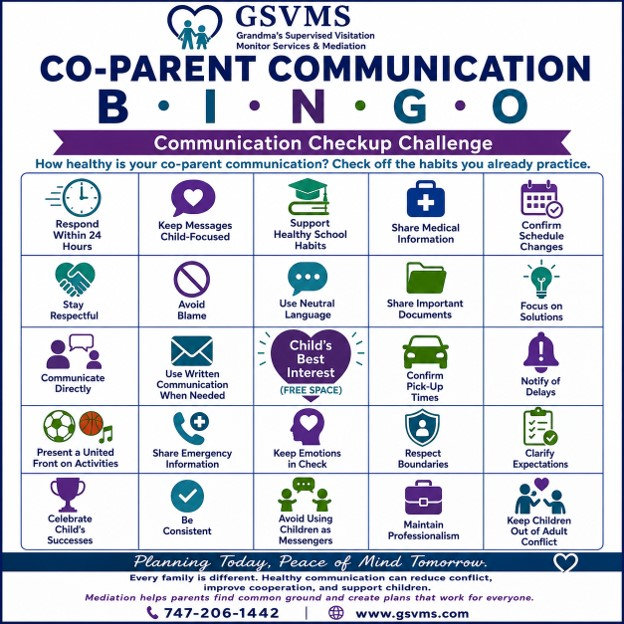
Co-Parent Communication: Conversations That Can Reduce Conflict and Improve Coordination - The GSVMS Co-Parenting Bingo Series #9
Keep Messages Child-Focused
Successful co-parenting often depends less on friendship and more on reliable communication. Respectful messages, timely responses, clear information and a focus on solutions can reduce conflict and make everyday parenting easier for children.
This post is part of the GSVMS Co-Parenting BINGO series: practical conversation starters designed to help families identify issues before they become unnecessary sources of conflict.
Communication is more productive when it addresses the child, the schedule or a specific decision rather than revisiting the adult relationship. Short, clear and factual messages often work better than emotionally charged exchanges.
Share Important Information
School notices, medical information, activity schedules, emergency contacts and meaningful changes should not depend on the child to pass them along. Direct adult-to-adult information-sharing supports consistency.
Handle Schedule Changes Clearly
When a change is needed, state the request, the proposed alternative and any time-sensitive details. Avoid vague messages that leave both households uncertain about what has actually been agreed.
Do Not Use the Child as Messenger
Children should not be responsible for delivering complaints, negotiating arrangements or reporting what happens in the other home. Keeping communication between adults protects the child from unnecessary pressure.
Choose the Right Communication Channel
Some co-parents communicate well by email, others by text or a parenting application. The best method is one that both people can access reliably and that allows important information to be found later.
Using too many channels can create confusion. When possible, agree where routine scheduling and child-related information should be sent, and reserve phone calls for urgent matters.
Separate Urgent From Important
Not every message requires an immediate response. A medical emergency is different from a request to trade weekends next month. Clear expectations about urgency can reduce the feeling that every notification demands instant attention.
Parents can help by stating when a response is actually needed. A message such as “Please respond by Thursday at 5:00 PM” is more useful than repeated follow-ups with no deadline.
Write Messages You Would Be Comfortable Reading Later
High-conflict communication can easily become part of a court record, mediation discussion or professional review. More importantly, harsh messages often make future cooperation harder.
Before sending, remove insults, accusations and unnecessary history. Keep the message focused on the current child-related issue and the action being requested.
Confirm Agreements Clearly
A conversation is not always the same as an agreement. When plans change, summarize the final arrangement in writing so both households have the same dates, times and responsibilities.
This simple habit can prevent many “I thought you meant…” disputes and gives both parents something concrete to rely on.
Co-Parent Communication BINGO
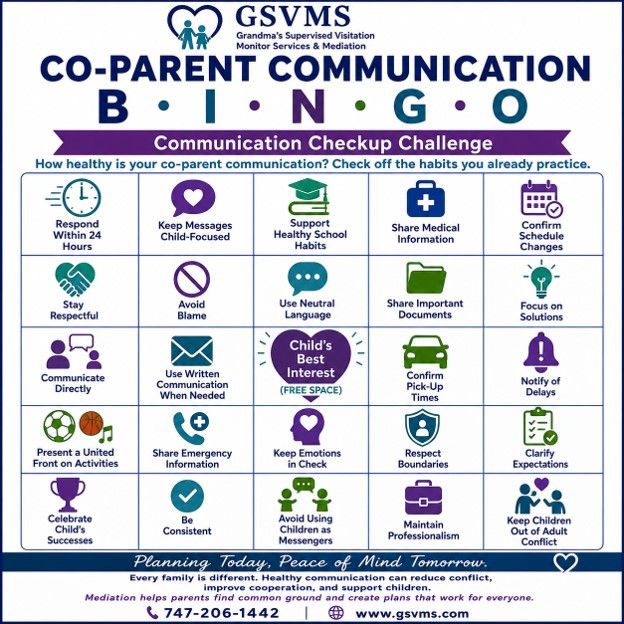
How to Play
Check each square that your family has already discussed or addressed. Five in a row—across, down, or diagonally—is BINGO. The unchecked squares are not failures; they are conversation starters that may reveal topics worth discussing before a problem develops.
How Many Boxes Can You Check?
Compare your completed squares and notice which subjects still need attention. The goal is not to “win” every square. The real value is identifying decisions early, communicating clearly and keeping children at the center of the planning process.
Call To Action
If these conversations are becoming difficult, GSVMS mediation services can help parents work through practical parenting and co-parenting issues in a structured setting.
GSVMS — Grandmas Supervised Visitation Monitors & Mediation Services provides mediation by Zoom and supervised visitation services throughout Southern California.
747-206-1442 • www.gsvms.com
Planning Today, Peace of Mind Tomorrow.