
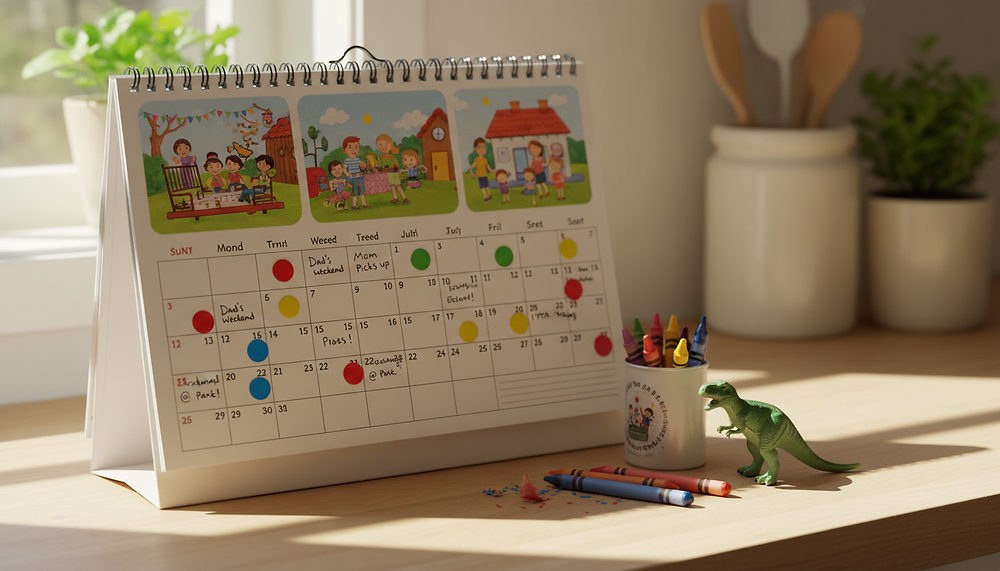
A parenting plan can look simple on paper until real life begins to press on the details. School nights, holidays, sick days, sports schedules, transportation, phone calls, new partners, travel, and missed exchanges can all create questions that the original plan may not answer clearly.
This blog series is designed to take those everyday custody and parenting plan issues one week at a time.
Over the next 52 weeks, each post will focus on one topic that often comes up for co-parents. The goal is to make parenting plan language easier to understand, easier to discuss, and easier to compare with the plan or court order already in place.
Each topic will be approached from two practical angles:
If this language is included in a parenting plan
If this language is not included or is unclear
What it may mean, how it may work, and what parents should think through before relying on it.
What problems may come up, what questions may need to be answered, and why clarification may matter.
This first post explains what the series will cover, how to use it, and why careful wording matters so much in custody and parenting plan discussions.
A legal disclaimer for every post in this series
This series is for general informational purposes only. It is not legal advice.
Custody laws vary by state. Parenting plans vary by family. Court orders vary by case. A phrase that works well in one plan may not be allowed, useful, or complete in another.
Before implementing any idea from this series, a parent should check that it conforms to:
Any current court order
Any existing parenting plan
The laws that apply in the correct state or jurisdiction
Any local court rules
Advice from a qualified family law attorney, if legal guidance is needed
If there is a court order, parents should not ignore it because something in a blog post sounds helpful. If there is a parenting plan, parents should read the actual language before changing routines. If there is a dispute, legal advice may be needed before taking action.
The purpose of this series is to help people ask better questions, notice common trouble spots, and understand how written parenting plan terms can affect daily life.
Why parenting plan language matters
A parenting plan is more than a schedule. It often becomes the guide for how parents share time, make decisions, exchange information, handle changes, and respond when life does not go according to plan.
Clear language can reduce arguments because it gives both parents the same reference point. Vague language can create stress because each parent may read the same sentence in a different way.
For example, a plan might say:
“The parents shall share transportation for exchanges.”
That sentence sounds reasonable, but it leaves many questions open.
Who drives on Fridays? Who drives on Sundays? What happens if one parent moves farther away? Does “share” mean split every exchange, alternate weekends, or meet halfway? What if the child has practice right before the exchange?
A clearer plan might explain the pickup location, the responsible driver, the timing, and what happens if a parent is late. That kind of detail may feel unnecessary when everyone is getting along, but it can matter when conflict rises or schedules change.
This series will look at those small details because small details often carry big consequences.
How each weekly post will work
Each weekly post will focus on one custody or parenting plan topic. The format will stay consistent so the series feels connected from week to week.
Most posts will include:
A plain-English explanation of the topic
Common reasons the issue appears in parenting plans
A look at what the term may mean if it is included
A look at what may happen if the term is missing or unclear
Practical questions to ask before relying on the language
A reminder to compare the idea with any court order, parenting plan, and applicable law
The series will not tell anyone what they must put in a plan. Instead, it will explain how a topic can operate once it is written down.
For instance, a post about holiday parenting time might explain that placing specific holiday times in a plan can reduce yearly arguments. The same post might also explain that if holiday language is missing, parents may end up relying on informal agreement, last-minute negotiation, or later court involvement if they cannot agree.
That two-view format will be the heart of the series.

The 52-week roadmap
The topics below are planned as a connected year of custody and parenting plan discussions. Some topics focus on schedules. Others focus on communication, decision-making, boundaries, travel, school, health, and problem-solving.
The order is designed to build from the basics toward more detailed issues that often come up later.
Week | Topic |
1 | Introduction to the 52-week custody and parenting plan series |
2 | Legal disclaimers, court orders, and why the written plan controls |
3 | Physical custody and parenting time basics |
4 | Legal custody and decision-making authority |
5 | Regular weekly schedules |
6 | School-year schedules |
7 | Summer schedules |
8 | Holiday schedules |
9 | Birthdays and special family days |
10 | Vacation parenting time |
11 | Transportation and exchange locations |
12 | Late arrivals, missed exchanges, and notice |
13 | Right of first refusal |
14 | Make-up parenting time |
15 | Phone calls, video calls, and child contact |
16 | Parent-to-parent communication |
17 | Communication apps and written records |
18 | Emergency contact rules |
19 | School communication and access to records |
20 | Homework, projects, and school responsibilities |
21 | Extracurricular activities |
22 | Sports schedules and weekend conflicts |
23 | Medical decisions |
24 | Routine health care and appointments |
25 | Mental health care and counseling |
26 | Dental, vision, and specialist care |
27 | Health insurance and uncovered expenses |
28 | Child care and babysitters |
29 | New partners and introductions |
30 | Grandparents and extended family time |
31 | Sibling schedules and blended families |
32 | Religious upbringing and observances |
33 | Cultural traditions and family customs |
34 | Travel inside the United States |
35 | International travel and passports |
36 | Relocation and moving concerns |
37 | Weather, illness, and unexpected closures |
38 | Military service or irregular work schedules |
39 | Shift work and nontraditional schedules |
40 | Breastfeeding, infants, and very young children |
41 | Toddlers and preschool transitions |
42 | Teen schedules and age-appropriate flexibility |
43 | Children’s preferences and boundaries |
44 | Social media, photos, and child privacy |
45 | Discipline and household rules |
46 | Substance use, safety concerns, and supervision |
47 | High-conflict communication safeguards |
48 | Dispute resolution before going back to court |
49 | Parenting coordinators, mediators, and other support |
50 | Modifying a parenting plan |
51 | Enforcing a parenting plan |
52 | Year-end review and building a plan that grows with the child |
The topics may be adjusted as the series develops, but the theme will stay the same: practical parenting plan insight, explained in plain language, with a legal disclaimer every time.
What “if this was put in the plan” really means
One of the most useful parts of this series will be the side-by-side look at parenting plan language.
A phrase in a plan can create expectations. It can also create limits. Once language appears in a court-approved plan or order, it may become something both parents are required to follow.
Take this example:
“Each parent shall have reasonable phone contact with the child during the other parent’s parenting time.”
That may sound simple. But “reasonable” can mean different things to different people.
One parent may believe a daily call is reasonable. The other may think two calls a week is enough. One child may enjoy calls. Another may feel interrupted or pressured. A plan with more detail might avoid confusion by stating how often calls happen, what time they occur, how long they last, and whether the child can call freely.
This series will often ask:
Does the wording explain who does what?
Does it include timing?
Does it explain notice requirements?
Does it address what happens if the plan cannot be followed?
Does it protect the child from being put in the middle?
Does it match the actual needs of the child and family?
The goal is not to make every plan longer. The goal is to make important terms clearer.

What “if this was not in the plan” can reveal
Sometimes the biggest issue is not what a parenting plan says. It is what it does not say.
A missing term does not always mean there is a problem. Some families can handle flexible arrangements well. Other families need more structure because communication is difficult, schedules are complex, or past conflict has made informal agreement unreliable.
For example, if a plan does not address school closures, parents may handle snow days or teacher workdays by agreement. That may work for years. But if both parents assume the other is responsible, the child care issue can become urgent fast.
If a plan does not address travel notice, one parent may believe a weekend trip within the state needs no notice. The other may expect the destination, hotel information, and emergency contact details. Without clear language, both parents may feel the other is being unreasonable.
A missing term can raise practical questions:
Is there a default rule under state law?
Does the court order already answer the issue somewhere else?
Have the parents followed a consistent past practice?
Is written agreement required before making a change?
Does the issue need a formal modification?
These questions are exactly why the disclaimer matters. A blog can explain common concerns, but the actual answer must come from the order, the plan, the law, or legal advice.
How to use this series without creating more conflict
Custody and parenting plan topics can be emotional. A post about exchanges, travel, or communication may bring up past frustration. The best use of this series is not to collect arguments against the other parent. The better use is to identify places where a plan may need clarity.
A helpful way to read each weekly post is to ask:
What does my current order or plan actually say?
Is the current language working for the child?
Is the issue a one-time problem or a repeated pattern?
Would clearer language reduce confusion?
Do I need legal guidance before raising this?
Keep a copy of the current parenting plan nearby when reading. Highlight the sections that relate to the weekly topic. If there is no written plan, use the topics as a way to think through what a future plan may need to address.
When possible, focus on child-centered details. A plan should not become a record of every past argument. It should give the child more stability and give the parents clearer instructions.
A few themes will come up all year
Even though each week will cover a different subject, several themes will repeat throughout the series.
Clarity helps.
A clear plan can reduce room for misunderstanding.
Flexibility has limits.
Flexible language can work when trust is high. It can create problems when parents disagree.
The child’s needs change.
A schedule that works for a toddler may not work for a teenager. A strong plan should account for growth when possible.
Written terms matter.
Informal habits may not carry the same weight as a court order or approved parenting plan.
Local law matters.
Custody rules are not the same everywhere. State law, local procedure, and the wording of the order can change the answer.
Safety matters.
Some topics, such as substance use, supervision, domestic violence concerns, or unsafe exchanges, may require professional legal help right away.
These themes will help connect the weekly posts so the series becomes more than a list of custody topics. It will become a year-long guide to thinking more carefully about parenting plan language.

What to expect next week
Next week’s post will focus on the legal disclaimer that will appear throughout the series. It will explain why court orders and parenting plans must be checked before any new idea is used, and why a helpful sounding suggestion may still be wrong for a specific case.
That post will set the ground rules for the rest of the year.
From there, the series will move into the building blocks of custody and parenting time, starting with physical custody, legal custody, and regular parenting schedules.
A good parenting plan does not remove every hard moment. It can give parents a clearer path when hard moments happen. Over the next 52 weeks, this series will look at that path one topic at a time, always with the same reminder: read the order, read the plan, check the law, and get legal advice when it is needed.